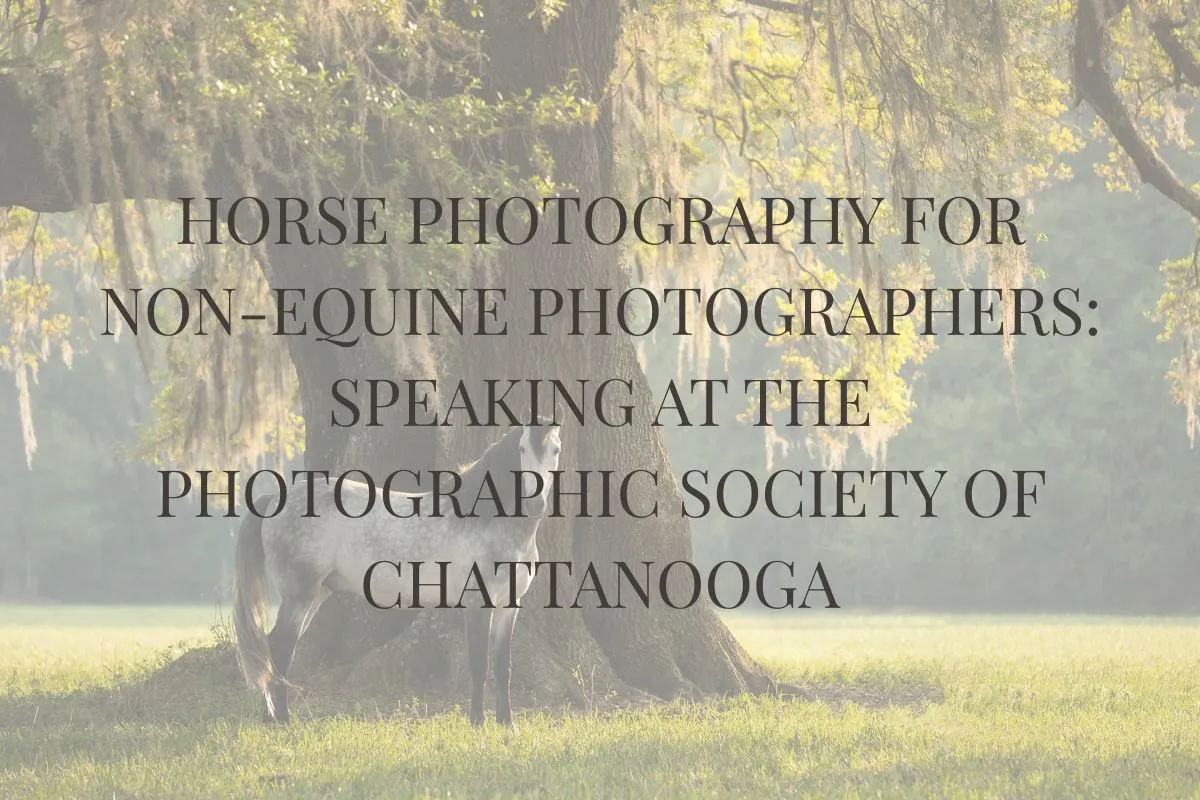
Horse Photography for Non-Equine Photographers: Speaking at the Photographic Society of Chattanooga
On July 20, 2023, I had the opportunity to speak to the Photographic Society of Chattanooga about a subject I know a thing or two about: photographing horses.
The presentation was called Horse Photography for Non-Equine Photographers, and the goal was pretty simple. Help photographers who don't normally work with horses understand what they need to know before pointing a camera at a 1,200-pound animal with its own opinions about how the session should go.
Because photographing horses isn't quite the same as photographing people, landscapes, or even dogs. There are some things you really need to know before you get started.
Understanding the Different Types of Horse Photography
We started by looking at the different kinds of horse photography, from equine portraits to horse shows and other equestrian events.
Each comes with its own challenges, and the techniques that work beautifully for a horse standing in a pasture aren't necessarily going to help you photograph one galloping across an arena.
We also talked about camera equipment, lens choices, shutter speeds, and some of the technical considerations that can make photographing horses a little easier.
Working With Horses (Without Getting Yourself Into Trouble)
One of the biggest things I wanted attendees to understand is that knowing how to operate a camera doesn't automatically mean you know how to work around horses.
Horses are large, powerful animals, and they're constantly paying attention to what's happening around them. Understanding their behavior and body language isn't just helpful for getting better images. It's important for keeping everyone safe.
We talked about how horses see the world, how they react to unfamiliar situations, and why photographers need to pay attention to what the horse is telling them.
Because no image is worth putting yourself, your client, or a horse in danger.
Posing, Composition, and Choosing the Best Images
Of course, we also talked about making horses look their best.
Horses have some pretty specific characteristics that photographers need to consider when choosing camera angles, composing images, and posing horses with their people.
A small change in position can make a big difference in how a horse looks in the finished image.
We also covered selecting images after a session, including what to look for when evaluating composition, focus, timing, and overall impact.
One of the challenges of photographing horses is that an image can be technically excellent and still catch the horse at a moment when it doesn't look particularly flattering. Knowing what to look for makes a difference.
Sharing What I've Learned
I enjoy teaching photographers, especially when I get to introduce them to something they haven't tried before.
You don't have to become a full-time equine photographer to benefit from understanding how to photograph horses. But if you find yourself working with a client who wants their horse included in a portrait session, having some basic knowledge of horse behavior, safety, and posing can make the experience a whole lot better for everyone involved.
And who knows? You might discover you really enjoy photographing horses.
Looking for a Speaker for Your Photography Organization?
I speak to photography organizations about equine photography, photography business topics, image competition, and other subjects that help photographers develop their skills and run better businesses.
If you're planning an educational program, workshop, or photography event, I'd love to talk about what your members would find useful.