How to Create an Equine Photography Business Plan You'll Actually Use
If the words business plan immediately make you picture a 47-page document full of charts, projections, and words you have to Google, I have good news.
That is not what we're doing here.
Most equine photographers are solopreneurs. We're photographers, marketers, editors, salespeople, customer service departments, bookkeepers, website managers, equipment wranglers, and occasionally professional horse-ear-getter-uppers.
And a lot of us didn't start with extensive business backgrounds.
We knew horses. We knew photography. Then at some point we decided to put those two things together and charge people money, which is approximately when the business part showed up and demanded our attention.
So before we start talking about target markets, revenue, marketing plans, or any of the other business words that sound much more intimidating than they actually are, I want to start somewhere else.
What kind of equine photography business do you actually want to own?
Because not everyone wants to be a full-time photographer. Not everyone wants a studio or employees or 100 clients a year. And not everyone wants photography to become the primary source of income for their household.
You get to decide what job you're creating for yourself.
That's where your business plan should start.
Start With the Life You Want, Not the Business You're Supposed to Build
It's really easy to look around at other photographers and start absorbing someone else's definition of what a successful photography business is supposed to look like.
Go full-time. Book more clients. Make more money. Get a studio. Build a team. Keep growing.
Okay, but what if you don't want any of that?
Maybe you have a career you love and want photography to be a profitable business you run on the side. Maybe you want to photograph two or three clients a month. Maybe you'd be delighted if the business paid for your horses. And considering what horses cost, that's not exactly a tiny goal.
Maybe you want meaningful supplemental income for your family. Or maybe your goal absolutely is to leave your current job and become a full-time equine photographer.
Great.
Those are all legitimate businesses. They're just not the same business.
That's why I want you to figure this part out before we start doing anything else. Otherwise, it's really easy to build the business everyone says you're supposed to want and discover somewhere along the way that you don't particularly want to run it.
The business you build to photograph 20 clients a year is going to look very different from the business you build to support your household full-time. Your pricing may be different. Your marketing needs may be different. Your sales model may be different. Your schedule will almost certainly be different.
So before you write anything else in your business plan, answer this:
What do I want this business to do for my life?
And while you're at it, think about what you don't want it to do.
Don't want to work every weekend? Good to know.
Don't want employees? Also good to know.
Don't want to photograph horse shows, travel three hours for sessions, work evenings, or spend half your waking hours trying to feed the social media beast? Put that in the plan too.
Sometimes knowing what you don't want makes figuring out what you do want a whole lot easier.
Okay, So What Kind of Equine Photography Business Are You Building?
Now we can talk about the actual business.
What do you want to photograph?
Horse and rider portraits? Horses at liberty? Seniors with their horses? Black background portraits? Horse shows? Breeders? Commercial work? Equestrian brands? Farms? Some combination?
You do not have to offer everything someone might conceivably hire a person with a camera to photograph.
In fact, please don't.
Think about what you actually want to photograph and what makes sense for the business you're trying to build.
Then think about how you're going to deliver that work.
Are you creating a portrait experience that ends with finished artwork? Photographing events and selling individual images? Offering digital collections? Licensing commercial images to equestrian businesses? Doing some combination of those things?
Congratulations. We're figuring out your business model.
That sounds very official, doesn't it?
Really, we're just figuring out what you're going to offer, who is going to buy it, and how money eventually makes its way into your bank account.
See? You already understand more business than you thought you did.
Who Do You Actually Want to Photograph?
This is where somebody usually says we need to identify your target market.
They're right. We're just not going to make it weird.
We need to figure out who is most likely to want what you sell.
And “everyone who owns a horse” isn't the answer.
Horse owners aren't one giant group of identical people who all want the same thing and spend money the same way. The amateur dressage rider who wants artwork of the horse she's owned for 15 years may want something completely different from a breeder who needs sale images of six young horses.
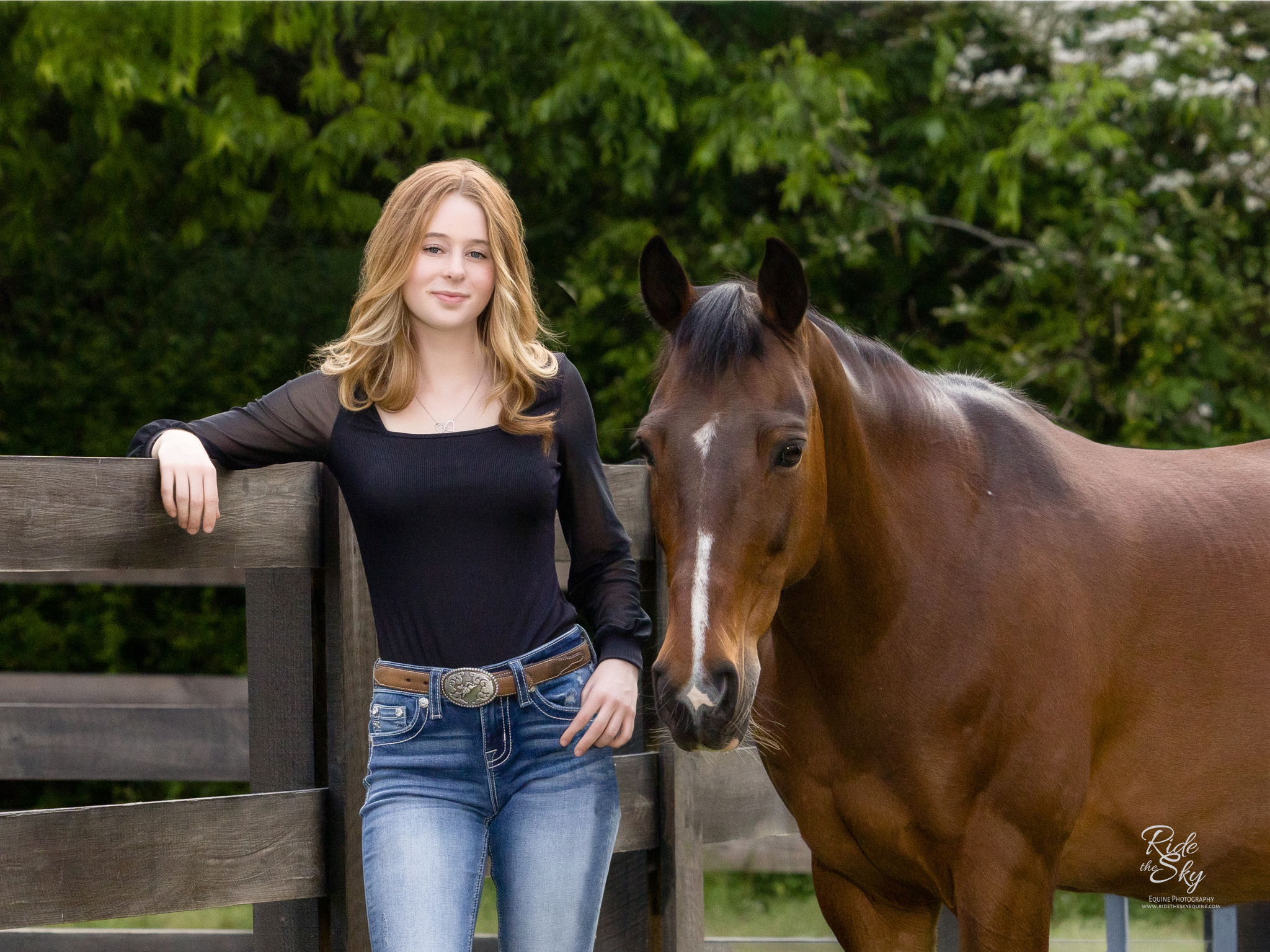
A high school senior who wants her horse included in her senior portraits is different from an equestrian clothing company that needs images for a new product launch.
Yes, there are horses involved in all of them.
That's about where the similarities end.
Think about who you enjoy working with, who needs what you're offering, and who is willing and able to purchase it.
And no, you don't need to invent an imaginary woman named Equestrian Emily, decide what cereal she eats for breakfast, and learn her favorite television show unless that information somehow helps you sell horse photography.
You do need to understand the people you're trying to reach.
What matters to them? What do they want from the experience or the finished photographs? Where do they spend their time? How do they choose a photographer? What might keep them from hiring you?
Those answers can actually help you make business decisions.
Knowing Equestrian Emily prefers Cheerios probably isn't going to move the needle.
What Are You Actually Selling?
This one sounds ridiculously obvious until you try to answer it.
“I photograph horses.”
Okay. That's what you do.
What does your client buy?
Does she pay a session fee and purchase artwork afterward? Does she buy a collection that includes the session and a certain number of digital images? Does she purchase individual images from an event gallery? Does a commercial client pay a creative fee plus licensing? Does a breeder purchase a package covering several horses?
You don't have to use the same sales model as another photographer. But you do need to know where the money in your business is supposed to come from.
If you're planning a low-volume portrait business, your sales model has to support a low-volume portrait business. If you're planning a higher-volume event business, the numbers and sales process are going to look different.
We're not going to solve all of your pricing and sales questions right now.
We just need to know what you're selling and how the business gets paid.
That's enough for today. We have plenty of other opportunities to do math.
How Much Does This Business Need to Make?
This is where that first question starts earning its keep.
If you want photography to provide $20,000 a year in supplemental income, you're building a different business from someone who needs it to replace a full-time salary.
Neither one makes you more or less of a professional photographer.
They just require different numbers.
And no, we don't have to figure out every number today. But we do need something more useful than, “I'd like this business to make money.”
Well, yes.
That would be nice.
How much?
And what do you want that money to do?
Once you have some idea of that, you can start figuring out whether your pricing, average sale, expenses, and number of clients can realistically get you there.
If you don't know how to figure all of that out yet, that's okay. That's something you can learn.
Right now, we're giving the business a job to do.
It's much easier to build a plan once you know what that job is.
How Many Clients Do You Actually Want?
Photography businesses spend an awful lot of time talking about getting more clients.
But how many do you actually want?
Maybe 20 clients a year sounds perfect to you.
Great.
Someone else may want 100 and be perfectly happy with that too.
Also great.
We're not handing out trophies for whoever photographs the most horses.
What matters is whether your business works with the number you want.
If you want 20 clients but the business you've designed requires 80, getting better at Instagram isn't going to fix it.
Something in the plan doesn't work.
Maybe it's your pricing. Maybe it's what clients purchase. Maybe it's your expenses. Maybe it's your income goal. Or maybe 20 clients isn't actually enough.
That's exactly the kind of thing I want your business plan to show you.
Much better to discover it on paper than sometime around client number 47 when you haven't had a free Saturday since March.
How Will the Right Clients Find You?
Okay, now we can talk about marketing.
Because saying “I need to market my business” isn't terribly useful until we know what the business is, what you're selling, and who you're trying to reach.
Once you know those things, deciding where to spend your marketing time and money gets a whole lot easier.
Your marketing might include your website and SEO, email, social media, barn relationships, referrals, partnerships with equestrian businesses, networking, events, advertising, blogging, or something else entirely.
You probably don't need all of them.
And you definitely don't need to join every new social platform because somebody announced that photographers absolutely HAVE to be there now.
Where are the people you're trying to reach? How can they discover you? What can you realistically keep doing without resenting your entire marketing plan three months from now?
If you need 20 clients a year, your marketing plan may look very different from the photographer who needs 150.
You don't need everyone to know you exist.
You need enough of the right people to know you exist.
What Happens When Someone Actually Hires You?
This is the part nobody sees on Instagram.
Someone sends you an inquiry.
Now what?
How do they get information? How do they book? When do they sign a contract? How do they pay? What happens before the session? What happens afterward? How do they choose images or products? How are orders fulfilled? When do you follow up?
That's your workflow.
And if your current workflow consists primarily of sticky notes, your inbox, and hoping you'll remember, you're not the first photographer to try that system.
What you need is a repeatable way to move someone from “Hi, I found you online” to “I have my photographs and everything is finished.”
For the business plan, that's enough.
You can build better systems around those steps later.
Please don't turn “write a business plan” into “spend the next six weeks building a 73-step CRM automation before I have a single client.”
We've wandered away from the assignment.
You Are Not Required to Know How to Do All of This
And here's where being a solopreneur gets a little ridiculous.
Somehow you're supposed to know photography, marketing, bookkeeping, taxes, contracts, sales, websites, customer service, and business strategy because you bought a camera and started a business.
That's quite the job description.
You are not going to know how to do all of it.
You also don't need to.
Look at the business you're planning and ask yourself three things: What do I already know how to do? What do I need to learn? And what makes more sense to hire someone else to do?
Maybe you need education in a particular area. Maybe you need an accountant, attorney, bookkeeper, assistant, editor, web designer, or someone else who knows considerably more about something than you do.
That's allowed.
Being a solopreneur doesn't mean you have to personally perform every job your business needs.
It means you're the person responsible for making sure those jobs get done.
There is a difference.
Thank goodness.
Where Do You Want This Business to Go?
Traditional business planning often asks where you want to be in one year, three years, and five years.
You can absolutely do that if it helps you.
But there's another question I think is more useful for a lot of us: What do I want to be different about this business a year from now?
Maybe you want higher average sales without adding more clients. Maybe you want fewer weekend sessions. Maybe you want to introduce finished artwork. Maybe you'd like to photograph more seniors with horses and fewer events.
Maybe you want the business to consistently pay you.
Maybe you want to leave your other job.
Or maybe you want to stay part-time.
I really want to make that last one clear.
You do not have to turn your photography business into your full-time job for it to count as a successful business.
You can intentionally build a profitable part-time business and keep it that way.
You can also decide that you don't want the business to get any bigger.
Growth doesn't automatically mean bigger.
Sometimes growth means making more money. Sometimes it means becoming more efficient. Sometimes it means getting more selective. And sometimes it means finally admitting that a service you've been offering for three years makes you miserable and you can, in fact, stop offering it.
Your business is allowed to get better without getting bigger.
Put Your Equine Photography Business Plan on One Page
All right. We've talked through the pieces.
Now let's actually write the thing.
If you need a formal business plan for financing or another specific purpose, that's different. You're probably going to need considerably more detail.
But if what you need is a working plan for your own solopreneur equine photography business, a simple one-page business plan can include your business goals, services, ideal clients, sales model, income needs, client capacity, marketing strategy, workflow, areas where you need help, and what you want the business to look like a year from now.
Start by answering these questions:
What role do I want this business to play in my life?
What do I photograph, and what services do I offer?
Who am I trying to serve?
What do my clients actually purchase from me?
How much does the business need to generate?
How many clients do I realistically want and have the capacity to serve?
How will those clients find me?
What needs to happen from inquiry through final delivery?
What do I already know, what do I need to learn, and where do I need professional help?
What do I want to be different about the business a year from now?
There you go. You have a business plan. No pie chart required.
Now Actually Use the Thing
This is the part I don't want you to skip.
Because writing the plan and then burying it three folders deep in Google Drive isn't terribly useful. The next time you have a business decision to make, pull it out.
Someone tells you that you should offer mini sessions. Does that fit?
There's a new marketing opportunity. Does it put you in front of the people you're actually trying to reach?
Another photographer is doing something that looks wildly successful and suddenly you're wondering whether you've been doing everything wrong for the last five years.
Hang on. Is she even building the same kind of business you're building?
You're considering a new product, service, piece of software, studio, employee, or expensive opportunity. Does it move your business in the direction you said you wanted it to go?
That's what I want this plan to do for you.
It's not supposed to predict every single thing that will happen over the next five years. And it definitely isn't supposed to prove that you understand impressive business terminology.
It's there to help you notice when the decisions you're making and the business you said you wanted start heading in two different directions.
Sometimes you'll discover the opportunity doesn't fit.
Sometimes you'll discover the plan itself needs to change.
Both answers are useful.
You don't need to build the biggest equine photography business you possibly can.
You don't even need to build a full-time one.
You need to build the equine photography business you actually want to own.