
How to Set Short-Term Goals for Your Equine Photography Business
“Grow my photography business” sounds like a perfectly reasonable goal.
Until Monday morning.
You sit down at your desk, look at your calendar, and realize you have absolutely no idea what you're supposed to do today that will make that happen.
That's the problem with a lot of the goals we set for our businesses. We genuinely want them. They're just too big or too vague to tell us what to do next.
That's where short-term goals become useful.
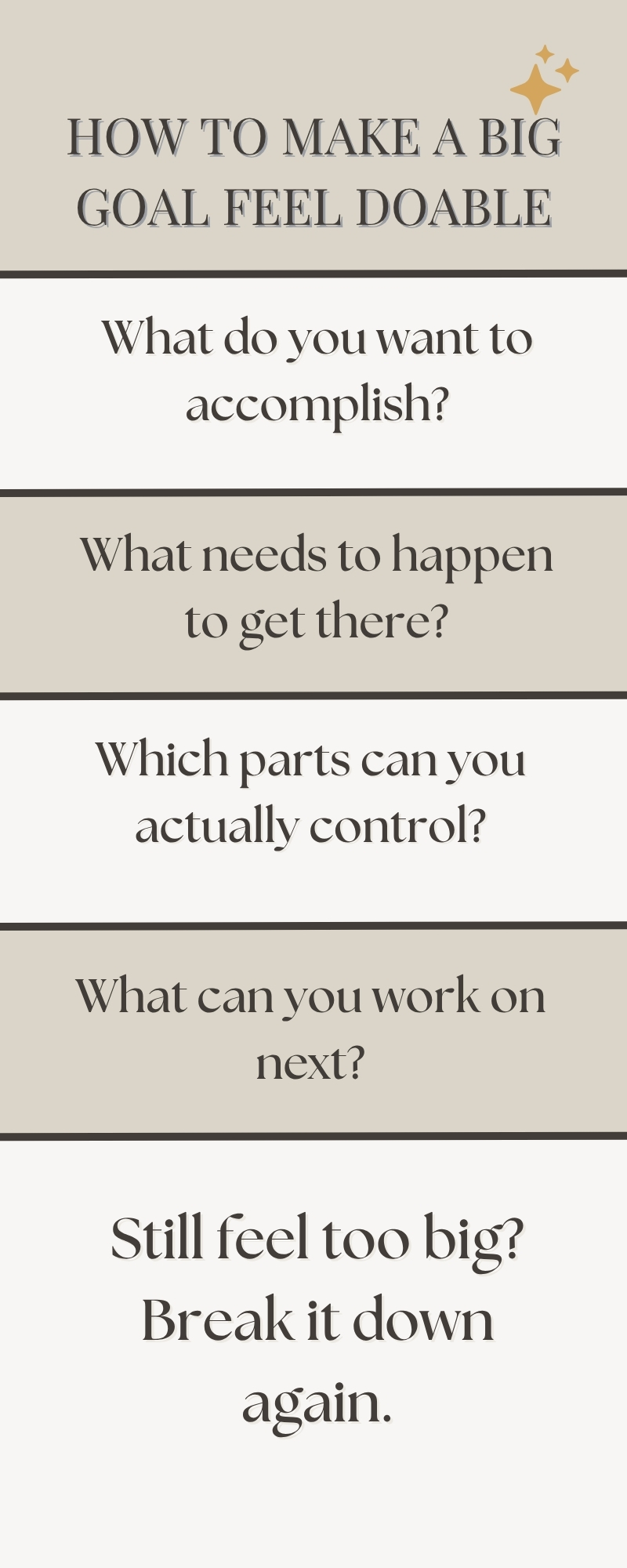
You take the bigger thing you're trying to accomplish and keep breaking it down until you get to something you can actually do.
No complicated goal-setting system required.
Quick Answer
To set short-term goals for your equine photography business, start with a larger result you want and work backward. Break it into smaller actions you can control, give those actions a realistic time frame, and put them on your calendar.
A good short-term goal should help you answer: What do I need to do next?
Start With Where You're Trying to Go
Before we start breaking anything into weekly goals, I'd make sure the bigger goal is something you actually want.
Let's say you decide you want to photograph 30 horse shows next year.
Okay. Why 30?
If you're building a business around horse-show photography and that number works with the income you need, the time you have available, and the life you want outside of work, great.
But if you picked 30 because another photographer shoots 30 shows and seems successful, I'd want to look at that again.
We do this with revenue goals too.
Someone says they want a six-figure photography business, but when you start asking what they actually want their business and life to look like, the number may have very little to do with either one.
So before we start breaking a goal into pieces, I'd ask what reaching it would actually do for your business.
Otherwise, we may get very good at working toward something you never particularly wanted in the first place.
Get Specific Enough That You Can Do Something With It
“Book more clients” isn't giving us much to work with. Neither is “make more money” or “do more commercial work.”
We need to get a little closer.
Say you're an equestrian senior photographer and you'd like to book six senior sessions for fall.
Okay. Now I know what we're trying to do.
Another photographer may want to photograph a particular reining circuit next season. Someone else wants to increase the average sale from horse-and-rider portrait sessions. Another wants to book four barns for spring mini-sessions.
Those businesses don't look the same.
They don't need to.
We just need a goal specific enough that we can start figuring out what would have to happen next.
There's the Result You Want and the Work You Can Do
This is a distinction I find really useful.
You can decide you want to book six equestrian senior sessions.
You cannot personally make six people hire you.
Rude, I know.
But there are plenty of things you can do that make those bookings more likely.
You can get the senior information onto your website. Contact barns or trainers. Email past clients. Plan the promotion. Follow up with inquiries.
Now we have things you can actually put on a calendar.
I still want to know the result we're aiming for. That's how we'll eventually know whether what we're doing is working.
I just don't want the only goal to be something we can't completely control.
Keep Breaking It Down Until It Fits on the Calendar
Let's use the photographer who wants to book four barns for spring mini-sessions.
You can't put “book four barns” on Tuesday's to-do list and expect Tuesday to handle it.
So what comes before that?
You need to know what you're offering. You need some barns to contact. They need enough information to decide whether they're interested.
Okay.
Maybe this week you finalize the offer and make a list of barns that could be a good fit.
Then you start reaching out.
Some will answer. Some won't. Somebody will probably ask a question you hadn't thought of, which may tell you something you need to change or explain better.
That's business.
The plan doesn't need to divide perfectly into four weekly boxes.
It just needs to give you the next thing to do. And, if you need help knowing the next thing to do, explore mentoring here.
Make Sure You're Working on the Goal You Think You're Working On
This is where I can get myself into trouble.
I can be extremely productive while avoiding the thing I actually need to do.
Let's go back to those six equestrian senior sessions.
You could reorganize your Lightroom catalog.
Update your logo.
Research a new CRM.
Redo your Instagram highlights.
Every one of those can be a perfectly legitimate business task.
But if the goal is six senior sessions, at some point we're going to have to do something that might actually result in someone booking one.
This is why I like having the bigger goal somewhere I can see it.
When I'm deciding what deserves my time, I can look at what I'm about to do and ask whether it has anything to do with what I said I wanted.
Sometimes it does.
And sometimes I'm apparently reorganizing folders because I don't want to send the email.
Also good to know.
If the Goal Still Feels Too Big, Keep Going
“Create a commercial photography portfolio” sounds specific until it's sitting on your to-do list.
Then you realize it's still enormous.
So let's keep going.
What kind of commercial work are you trying to attract?
Which photographs do you already have that belong in the portfolio?
What's missing?
Do you need to create something specifically for it?
Where will the portfolio live?
Eventually we get down to something like:
Choose 20 existing images to review for the commercial portfolio.
That I can do.
And once I've done it, I'll probably know more about what needs to happen next.
You don't necessarily need to map every step of a six-month project before you start. Sometimes you need enough of a plan to get moving and enough room to change it once you learn something.
Give Yourself a Time Frame That Makes Sense
Short-term doesn't automatically mean this week.
Some things will take a week. Some will take a month. Some may take a quarter.
And your photography business probably has seasons.
If spring and fall are packed with horse shows or sessions, deciding that October is also when you're going to completely rebuild your website may not be your finest scheduling decision.
Look at what's already happening.
How much time do you realistically have for this?
What would meaningful progress look like during that time?
I'd rather make real progress on one important goal than create eight of them and spend the end of every month moving seven to next month.
Pay Attention to What Happens
The original plan is allowed to be wrong.
Say you've contacted ten barns about spring mini-sessions and nobody has responded.
You could keep contacting five barns every week because that's what you wrote on the calendar.
Or we could figure out what's going on.
Maybe you're contacting the wrong barns. The offer may need work. People might be interested but the timing is terrible. Maybe they don't understand what's in it for the barn.
We don't know yet.
But “keep doing the same thing because it's on the goal sheet” isn't automatically the answer.
The point of the short-term goal was to move the business.
If it isn't doing that, we get to change the plan.
This Is Really About Knowing What to Do Next
That's why short-term goals work so well for me.
A big goal can hang around for months looking very official while I continue doing exactly what I was doing before.
Breaking it down makes me deal with what actually has to happen.
If I want to increase my average portrait sale, what's the next thing I need to look at?
If I want to photograph a particular event next year, who do I need to talk to?
If I want more people on my email list, what am I giving them a reason to sign up for?
If I want more sessions, what am I doing that could actually lead to someone booking one?
Now I have something I can work on.
I don't have to know every step between where I am and the big goal.
I need to know enough to take the next one.
Then I can see what happens and decide what comes after that.
Which is considerably more useful than writing “grow the business” on my goals list and hoping Future Betsy knows what I meant.
Know You Need to Move Forward, but Not Sure What to Work on Next?
Sometimes breaking down the goal isn't the hard part. It's figuring out which goal actually deserves your attention in the first place.
That's something we can work through together in mentoring. We'll look at where your photography business is now, where you want it to go, and what makes sense to work on next.